280NMI-第4期|我們何以描繪海的模樣?
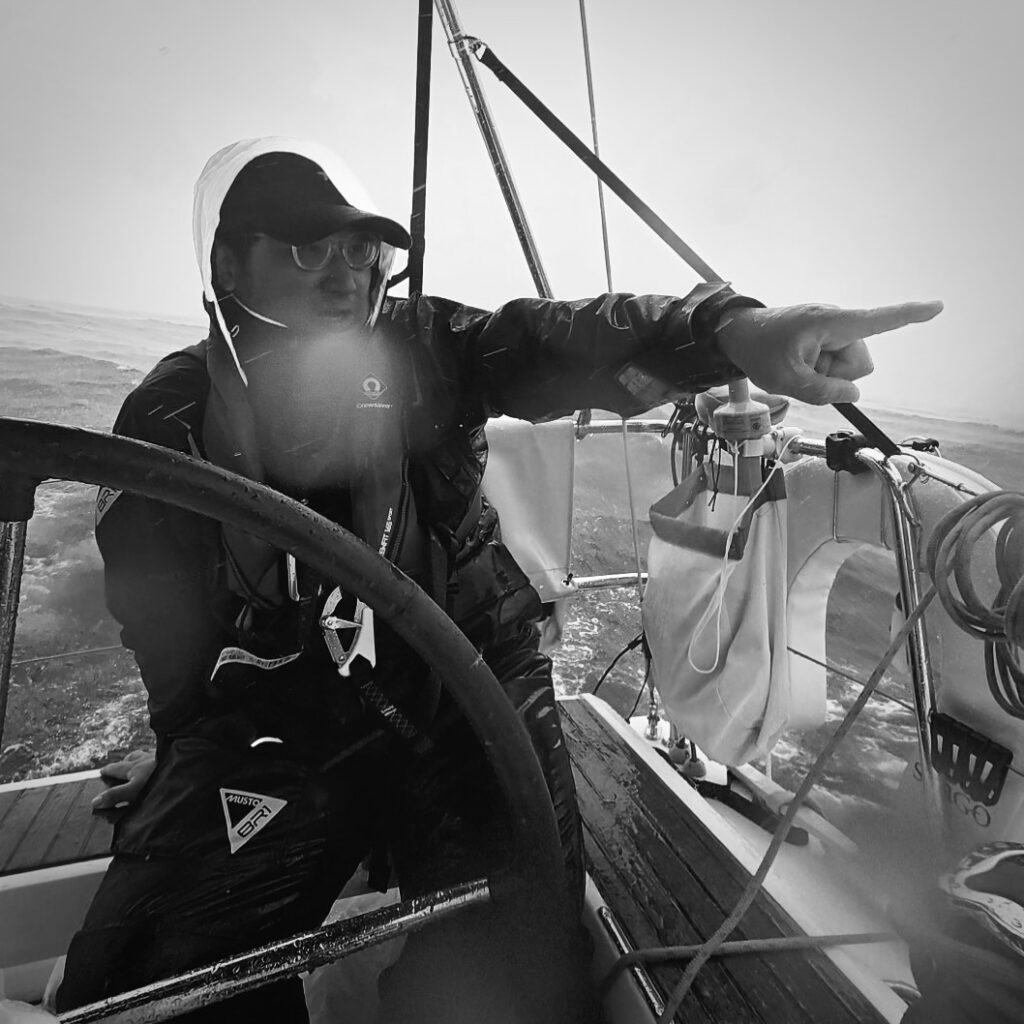
在航行過程中我與 Edric 聊天時發現他過去主修的語言學,於是我們聊到了語言的起源,他打了個比方,例如愛斯基摩人有很多種詞彙描述不同的雪,那到底是因為有很多種雪而產生了很多種描述的樣子?還是先有了很多種詞彙而得以細緻的描繪不同的雪呢?航行中我們有許多時間就在這一類語言學的問題思考中度過⋯⋯。
航行至今,大多時候我並沒有適合的語言與詞彙描繪海洋,描繪這綺麗的星球,就像我們只有幾種描述雪的方式吧?也許我們的語言框架侷限了我們認識海洋的方式吧?
我們何以描繪海的模樣呢?
***
Edric 目前的工作是英文教師,專門輔導準備出國留學的學生,他的言談中有著高度專業⋯⋯但可能也參雜著許多幹話,我總戲稱他是人體抖音,利用語言學專業唬弄我們。他對事業的期許是北中南各開一間補習班!以他的口條,我相信很快能達成目標囉!
280NMI–Session 4|How Do We Render the Sea?
While sailing, I had a conversation with @edric_waters and discovered he had majored in linguistics. Naturally, we began talking about the origins of language. He offered a thought-provoking analogy: the Inuit have many distinct words for snow.
But which came first—was it the many forms of snow that gave rise to the vocabulary? Or did the vocabulary itself allow them to notice snow in more intricate detail?
During the voyage, we found ourselves often lost in reflections like this—language and the way it shapes how we perceive the world.
As for me, even after many miles at sea, I still struggle to find the right words to render the ocean—to give form, through language, to this breathtaking planet. Perhaps it’s just like having only a few ways to describe snow: our linguistic framework might be too narrow to hold all that the sea truly is.
How do we render the sea?
How do we sketch its face, its rhythms, its voice?
***
Edric now works as an English teacher, helping students prepare for studying abroad. He speaks with impressive expertise—though, to be fair, also with a fair amount of nonsense. I often joke that he’s a walking TikTok feed, using his linguistics background to play tricks on the rest of us.
His ambition? To open cram schools across northern, central, and southern Taiwan.
With his eloquence, I have little doubt he’ll get there.